The Latest
Stay up to date on the latest news and conservation efforts for the Mojave Desert Tortoise.
MOJAVE DESERT TORTOISE OFFICIALLY JOINS CALIFORNIA ENDANGERED LIST
The California Fish and Game Commission has formally recognized the Mojave desert tortoise as endangered. The designation, granted Thursday, is the latest in a long series of steps to try to protect the dwindling population of the desert creature, which biologists say is heading toward extinction. The tortoise was designated as threatened under the California Endangered Species Act in 1989 and as threatened under the Endangered Species Act in 1990. In 2020, Defenders of Wildlife, Desert Tortoise Council and Desert Tortoise Preserve petitioned to change the tortoise’s status to endangered, which would give it higher priority and funding for conservation measures such as habitat protection and recovery efforts. The commission then granted temporary endangered species to the desert tortoise while it considered adding it permanently to the list. A recovery plan was created in 1994, and then revised in 2011 after there were issues implementing the recovery strategies. Between 2001 and 2020, population densities in tortoise conservation areas went down by an average of 1% per year in the Colorado Desert and Eastern Mojave Recovery units, according to a February 2024 California Department of Fish and Wildlife report. The minimum density for the tortoises to remain viable is 3.9 adults per square kilometer, according to the report. Only 2 out of the 10 designated tortoise conservation areas currently meet that threshold. About 1 million animal and plant species are at risk of being endangered — more than ever in human history, according to a recent report from the Intergovernmental Science-Policy Platform on Biodiversity and Ecosystem Services. The abundance of native species in land habitats has decreased by about 20% since 1900, according to the report. More than 40% of amphibian species, nearly 33% of reef-forming corals and more than a third of marine animals are threatened. Sadly, California’s state reptile — formally Gopherus agassizii — is hurtling toward extinction. Vehicle strikes, urban encroachment, hungry ravens, military maneuvers, disease, drought, extreme heat, wildfires, illegal marijuana grows and development of massive solar farms are all pushing the species to the brink. The tortoises live in the rocky foothills north and west of the Colorado River in California, Arizona, Utah and Nevada. They feed on grasses, cacti, herbs and wildflowers. They hibernate for up to nine months each year and are most active from March to June and September to October. The sleep pays a longevity dividend — the tortoises can live for 50 to 80 years.
Over 2,200 Miles of California Dirt Roads Closed to Protect the Desert Tortoise
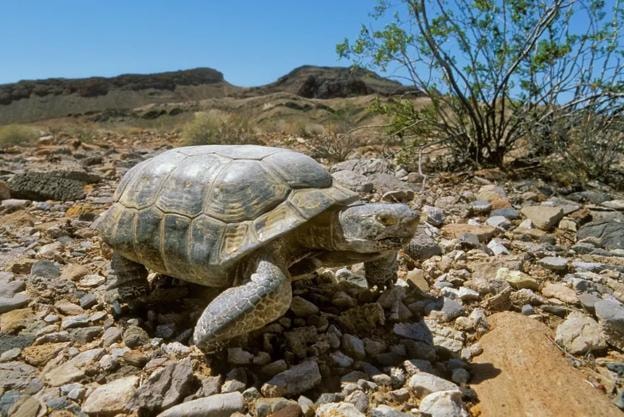
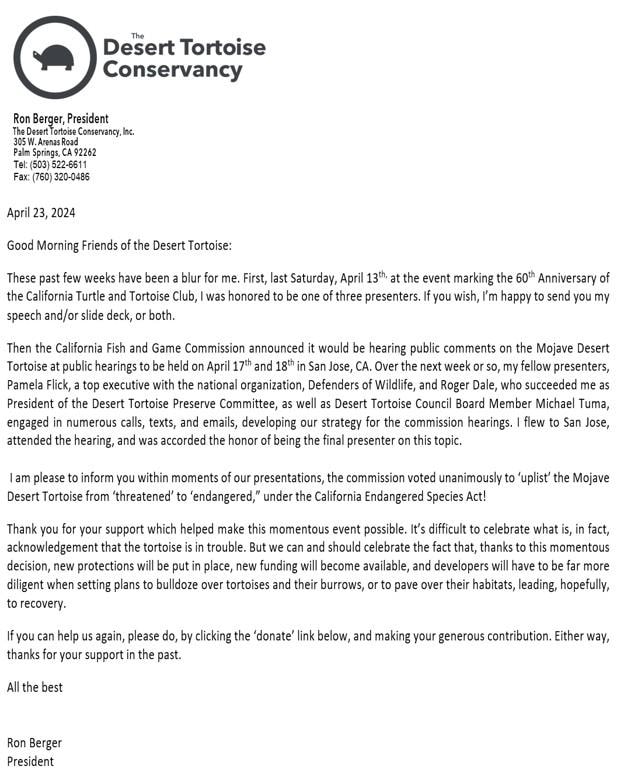
Back in 2019, during the first Trump administration, the Bureau of Land Management approved the West Mojave Route Network Project, a proposed network of roads for off-highway vehicles, or OHVs, criss-crossing the inland California desert. The routes would traverse various BLM managed lands that included areas near Twentynine Palms and Joshua Tree National Park, in the mountains north of Barstow, and in the desert around Ridgecrest off Highway 395, along with other regions. All told, the road network includes public lands in Riverside, San Bernardino, Kern and Inyo counties. The Center for Biological Diversity, the Sierra Club and several other environmental groups sued the BLM and other federal agencies over the project in 2021, arguing that the bureau approved the plan without fully considering potential damages to the desert landscape and wildlife, including the desert tortoise. In a court ruling last week, a federal judge agreed, prohibiting off-road vehicle use in areas deemed critical habitat for the desert tortoise and the Lane Mountain milkvetch, an endangered desert plant. The decision partially undoes the BLM’s approval of the route network project by reversing the adoption of any routes within those critical habitats. All told, the reversal applies to approximately 2,200 miles of the nearly 6,000 miles of dirt roads initially approved. The court ruling states that while creating the route network, “the agencies never explained how the designation of thousands of miles of routes in desert tortoise critical habitat was consistent with” requirements to minimize impacts on endangered species under the Federal Land Policy and Management Act or with the Endangered Species Act’s “goals of preventing extinction of listed species or the more ambitious goal of species recovery.” The ruling goes on to note that studies available in the administrative record of the decision showed that prohibiting off-highway vehicles would help the desert tortoise, and “the agencies have long recognized that OHVs cause numerous negative impacts on the protected animal.” The court estimates that the “significant closure” of off-highway vehicle routes in desert tortoise critical habitat would still leave about 63% of OHV routes available in the plan area. The Center for Biological Diversity hailed the decision in a news release, adding that desert off-roaders still “have access to thousands of miles of routes outside of tortoise critical habitat.” The large, lumbering desert tortoise, which can live to around 80 years old, is listed as threatened under the Endangered Species Act. The total population of western Mojave adult tortoises declined by nearly 50% between 2004 and 2014, with the number of tortoises killed estimated to be over 67,000, according to information presented by the Center for Biological Diversity at a 2023 court hearing. “I’m grateful the judge recognized the need to take action to stop the steep decline of desert tortoises in the West Mojave,” Lisa Belenky, a senior attorney at the Center for Biological Diversity, said in a news release. “Protecting these rare tortoises from extensive off-road vehicle use in their most important habitat will give them a chance to make a comeback. This is how the Endangered Species Act is supposed to work, protecting plants and animals from extinction by protecting the places they live.”’ As more and more people travel through the California desert and visit popular landscapes at the Mojave National Preserve and Joshua Tree National Park, the desert tortoise is also increasingly threatened by vehicles on paved roads. In Joshua Tree National Park, bright yellow “tortoise crossing” signs are strategically placed along Park Boulevard to warn drivers to slow down and keep an eye out for a large tortoise slowly crossing the road. In the Mojave National Preserve, officials are spending more than $1 million to install 2-foot-tall metal barriers that are intended to keep tortoises from trying to cross busy roads. One wildlife biologist with the preserve previously told SFGATE that in the 1970s, the preserve had around 200 to 250 tortoises per square mile. Now, that figure is closer to three.
HOW ONE ZOO HELPS SAVE THE DESERT TORTOISE
Under the unyielding desert sun, a quiet yet fierce struggle for survival is underway. Here, among the creosote bushes and shifting sands, the desert tortoise — one of North America’s oldest inhabitants — is vanishing at an unprecedented pace. As a keystone species, the desert tortoise is vital to this fragile ecosystem. Its burrows offer shelter for countless creatures, and its slow but essential role in seed dispersal helps maintain the delicate balance of plant and animal life. Yet, with expanding development and shifting climates, the tortoise’s habitat is shrinking, while increased predation and human impact threaten its future. Once an abundant but gentle presence, with an estimated 150 to 350 individuals per square mile in the 1970s, the desert tortoise population has plummeted to fewer than 10 per square mile as of 2019. This steep decline prompted the California Fish and Game Commission to uplist the tortoise’s status in 2024 from “threatened” to “endangered,” highlighting the urgency of its plight. Now, The Living Desert Zoo and Gardens and its partners are working to change the odds, bringing a spark of hope to the beleaguered species. BRAVING THE ELEMENTS The Living Desert is celebrated for its global conservation work, but its mission to protect the desert tortoise hits particularly close to home — and may be among its most critical. “Sometimes people think of conservation as a distant problem somewhere else, but we have just as much of an issue with threatened or endangered species locally, right here in the Desert Southwest,” says Allen Monroe, president and CEO of The Living Desert. “One of the stories that ties our work together locally is the desert tortoise.” For thousands of years, desert tortoises have lived in the Mojave, Colorado, and Sonoran deserts of Southern California, where their burrows inadvertently create safe havens for other species. By dispersing seeds and building burrows, they shape the landscape and support the biodiversity that sustains this delicate ecosystem. Without tortoises, these habitats would unravel, triggering cascading effects across the food web. In recent decades, California’s state reptile has faced relentless threats from habitat loss, climate change, and, surprisingly, ravens — whose numbers have ballooned 1,700 percent in just a few decades thanks to human food waste. Opportunistic and intelligent, ravens find easy meals around restaurants and shopping centers, thriving on discarded food like French fries from open dumpsters. Young desert tortoises are also on the ravens’ menu, with the small hatchlings — about the size of a pingpong ball — especially at risk. Born with shells that are too soft to offer any protection, hatchlings have no defense against a raven’s sharp beak. Fewer than 1 percent of hatchlings survive to adulthood. “Hatchlings are sort of like a jelly-filled donut for a raven. Quick and easy,” Monroe says. “Of course, ravens are just doing what they’re supposed to be doing. But the tortoises don’t stand a chance.”
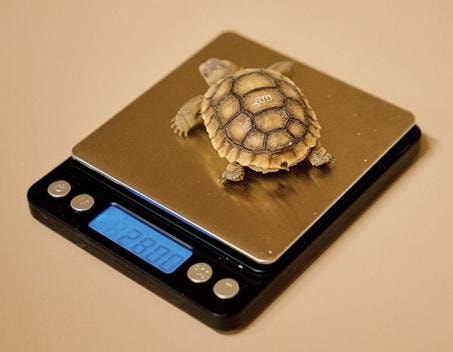
THE HEADSTARTING SOLUTION At The Living Desert, a creative solution is giving vulnerable tortoises a real shot at survival. Emily “Lou” Thomas, lead conservation biologist, is part of a headstarting program that began at Edwards Air Force Base in partnership with the San Diego Zoo Wildlife Alliance and the U.S. Geological Survey. By raising young tortoises in human-managed care during their most vulnerable early years, the program gives them a “head start” before releasing them into the wild. “Research shows that the larger a tortoise is at release, the better its chance of surviving desert challenges,” Thomas explains. Each tortoise is carefully nurtured until its carapace measures at least 100 millimeters in length, a critical threshold for resistance to raven predation. Hatchlings are raised in temperature-controlled habitats with artificial burrows that mimic warm, natural conditions. They are also fed nutrient-rich diets to which, in conjunction with warm temperatures, accelerates growth beyond what would be possible in the wild. “Every detail matters,” Thomas says. “We use natural substrates like river sand and rocks, so they get used to the terrain they’ll encounter outside. Each habitat has multiple burrows, with warmer and cooler zones to boost metabolism and growth, which is exactly what we need them to do.”
OSWIT LAND TRUST DOES IT AGAIN!
August 7, 2024 639 Spectacular Acres Purchased for Conservation! Palm Springs, CA – Oswit Land Trust (OLT), is proud to announce the acquisition of 639 acres in Indio Hills, CA. The land was purchased for 4 million dollars thanks to grants Oswit Land Trust obtained from United States Fish and Wildlife Service (USFWS) Section 6 grant and the California Wildlife Conservation Board (WCB). The property, referred to as Happy Valley, is a spectacular, undisturbed alluvial fan with diverse vegetation and significant value to native wildlife. The property is an important migration corridor between the Coachella Valley and Joshua Tree National Park and is critical for the endangered Mojave desert tortoise that have historically been reported within the property boundaries. This property also creates an important buffer zone for all wildlife since it abuts land that is already protected on two sides. Jane Garrison, Founder and Executive Director of Oswit Land Trust, says “The acquisition of the Happy Valley property is so important for its biological value, vulnerability to destruction, critical wildlife habitat and its proximity to already conserved land which creates a necessary wildlife corridor. It is the perfect acquisition for wildlife.” She continues to state , “Oswit Land Trust is certainly fulfilling its mission of “Saving Wildlife One Acre at a Time” and we are not slowing down anytime soon!” OLT is immensely grateful to the landowners who agreed to allow OLT to apply for grants to purchase the property. This process can take up to 2 years and can't be done without the willingness and patience of landowners. The property was slated for development but now is protected in perpetuity. Oswit Land Trust is asking the community for support in covering the expenses of the acquisition that are not covered by the grants which total over $25,000. These expenses include required environmental studies, appraisals, taxes and other closing costs. Please visit https://oswitlandtrust.org/ to donate to the Happy Valley acquisition. Oswit Land Trust is a 501C3 land trust based in Palm Springs, California, that focuses on saving the fragile desert ecosystems in the Coachella Valley and throughout Southern California. Contact: Jane Garrison [email protected], 843-343-8887
THE POWER OF PROGRESS: HEAD-STARTING AND THE FUTURE OF MOJAVE DESERT TORTOISE CONSERVATION
Researchers from the University of Georgia’s Savannah River Ecology Laboratory in collaboration with the University of California, Davis, recently conducted a study in the Mojave National Preserve in San Bernardino County, California, to further investigate the effectiveness of head-starting as a conservation tool for the Mojave desert tortoise. This species is currently listed as “Threatened” under the federal Endangered Species Act due to significant threats from habitat destruction and over-exploitation and was listed as “Endangered” by the State of California. Because of their slow life histories, tortoises are particularly vulnerable to population declines, making it imperative to find innovative conservation solutions. Tracey Tuberville, senior research scientist at UGA’s SREL and one of the lead scientists for this project, states, “The main reason that the Mojave desert tortoise is threatened stems from human alteration or destruction of its habitat. Increased drought and wildfires can also cause direct mortality of these desert-adapted animals.” Head-starting involves the raising of juveniles to larger sizes to improve their survival and protect them during their vulnerable early life stages. While head-starting doesn’t fix the problems that originally led to the decline of desert tortoises, it can help “jump-start” populations by injecting a pipeline of juvenile tortoises that have made it past the most vulnerable years of their life. “Some populations have declined to an extent that they are unlikely to recover on their own,” Tuberville explains. “By helping animals through those vulnerable first few years, we are increasing the number that are on the trajectory to adulthood. There is also a good chance that head-starting might also shorten the time it takes juveniles to reach adulthood because maturity is based on size, not age.” In the recent study authored by SREL graduate student Collin Richter, researchers attached radio transmitters to released tortoises to track their movements and monitor survival. For three years researchers periodically recorded each tortoise’s location and behavior. The tortoises were released in the Mojave National Preserve as part of the long-term effort by SREL, UC Davis, and the National Park Service to help recover desert tortoise populations in the park. They found that a tortoise’s space use depended on the head-starting treatment that it received. Smaller and younger tortoises had smaller home ranges and higher site fidelity, which is the tendency of an animal to return to a previously visited location. However, regardless of how tortoises were head-started, their home range size decreased, and site fidelity increased with time since release, indicating that they had settled into the release site. Their study yielded rare and valuable insights into juvenile Mojave Desert tortoise behavior and head-starting as a tool for tortoise conservation. The study found that survival rates did not differ significantly among the three treatment groups or with tortoise age or size. Survival for all treatment groups was high, except in the final year of monitoring when tortoises had to battle extreme drought conditions. “Sometimes things happen that are beyond our control, such as drought after a release year,” Tuberville explained. “One of our most successful programs has been for desert tortoises. We knew from the outset that it would be a twelve-or-more-year project. That allowed us the ability to try different rearing and release methods, experimentally test them, and compare the results. And progress has been incremental, with us learning from each release and continually trying to optimize or improve the process.” The study is the latest in a series of efforts by the researchers and their graduate students to help develop tools for recovering turtle populations. Head-starting has been viewed with skepticism because it is often difficult to evaluate and some question its effectiveness at increasing populations. However, head-starting has shown promise for many species, especially when used in unison with other conservation measures that target multiple life stages. Attitudes have certainly changed over the past two decades and practitioners have been more open-minded towards head-starting. This change of heart is partially due to the increasing concerns for turtle species and that more intrusive management may be necessary to recover their populations. Tuberville explains, “One type of criticism has been that head-starting is a ‘bandaid’ that doesn’t fix the root of the problem. We’ve never approached head-starting as a way to compensate for the loss of adults from the population. Rather, we’ve viewed it as one tool to use in concert with other management options.” There are a growing number of studies that have been conducted on post-release monitoring of a wide variety of head-started turtle species. Many of these scientific studies had promising results. This provides the leverage or assurances that some practitioners or agencies are seeking before they implement head-starting themselves. The future of Mojave desert tortoise conservation is promising now that SREL researchers feel like they have an efficient head-starting method that works well for desert tortoises. They are looking for novel ways to use these head-started tortoises to recover their populations. “We hope that by making it efficient and cost-effective, head-starting might be implemented at more sites across the species’ range,” Tuberville states. “Current angles we are exploring include restoring sites after wildfires or releasing at sites that may serve as climate refugia.” Climate refugia is an area where special environmental circumstances have enabled a species to survive after failure to survive in surrounding areas. Results of the study were published in the journal Global Ecology and Conservation, titled Effects of head-starting on multi-year space use and survival of an at-risk tortoise, completed by Collin Richter, Brian Todd, Kurt Buhlmann, Carmen Candal, Pearson McGovern, Michel Kohl, and Tracey Tuberville.
Help Our Cause
Your donation directly supports desert tortoise conservation, education, and the creation of the Desert Tortoise Awareness Center.